Module ten goes over the concept of sustainable practices, different lighting methods, and energy conserving technologies that could help the efficiency of production in a greenhouse. This allows the grower to be environmentally conscious while also saving costs on labor and energy consumption.
Photoperiodic lighting is a form of lighting that allows for a synthetic extension of a day. The supply of light is primarily electrical and can be controlled and timed by the greenhouse manager. For example, cycling lighting, is an intermittent form of light exposure and comes in three forms. A rotating light, a moving or blinking light, or a timed light schedule. In order to be more efficient while saving energy, the grower can switch incandescent lights with CFLs. CFL, which stands for compact fluorescent lamps, saves a significant amount of energy in comparison to other forms of lighting. Yet, CFLS are only useful for specific crops so the grower may consider making every other lamp a carbon fluorescent.
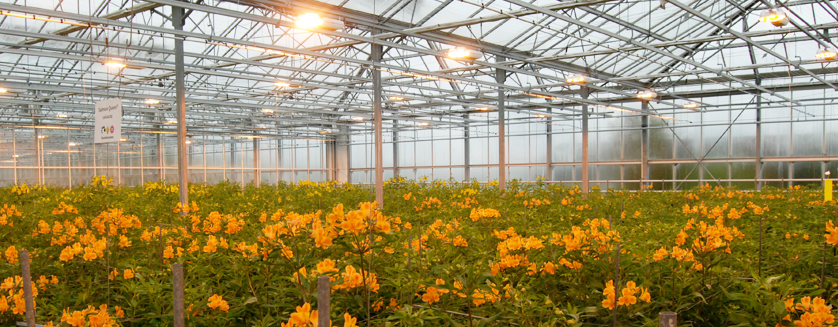
The higher the intensity of a light, the more likely to induce an earlier onset of photosynthesis. The grower may also consider an HPS lamp; which is a high-pressurized sodium lamp. The HPS lamp emits a lot of heat, which saves on heat generation costs, and increases radiation and helps with the beginning of the photosynthetic process. LED, light-emitting diode, lights although they are economically beneficial, they are not necessarily efficient in encouraging plant growth.
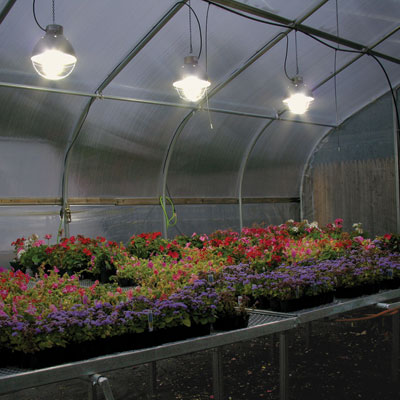
Controlling humidity levels, usually maintained somewhere between 60-80% humidity, in a greenhouse is vital to avoid fungal infections in plants and to help regulate plant transpiration. If the humidity surpasses 80%, plants are at risk of over condensation and creating fungal diseases. If humidity is too low then other fungal infections, such as powdery mildew, may occur. Increasing ventilation and air circulation within the greenhouse structure, helps avoid the effects of over humidifying and build up of water vapor. There are two types of ventilation, which are natural ventilation and force ventilation. Natural ventilation is in relation to the pressure of temperature change within the greenhouse. This natural ventilation is sustainable and is induced by fans that move large masses of air at low pressures. Forced ventilation also requires fans that can move large masses of air at low pressures, but the fan used is an axial fan which is direct driven. Also, covering films which aid in avoiding over condensation are something a greenhouse manager could consider installing.
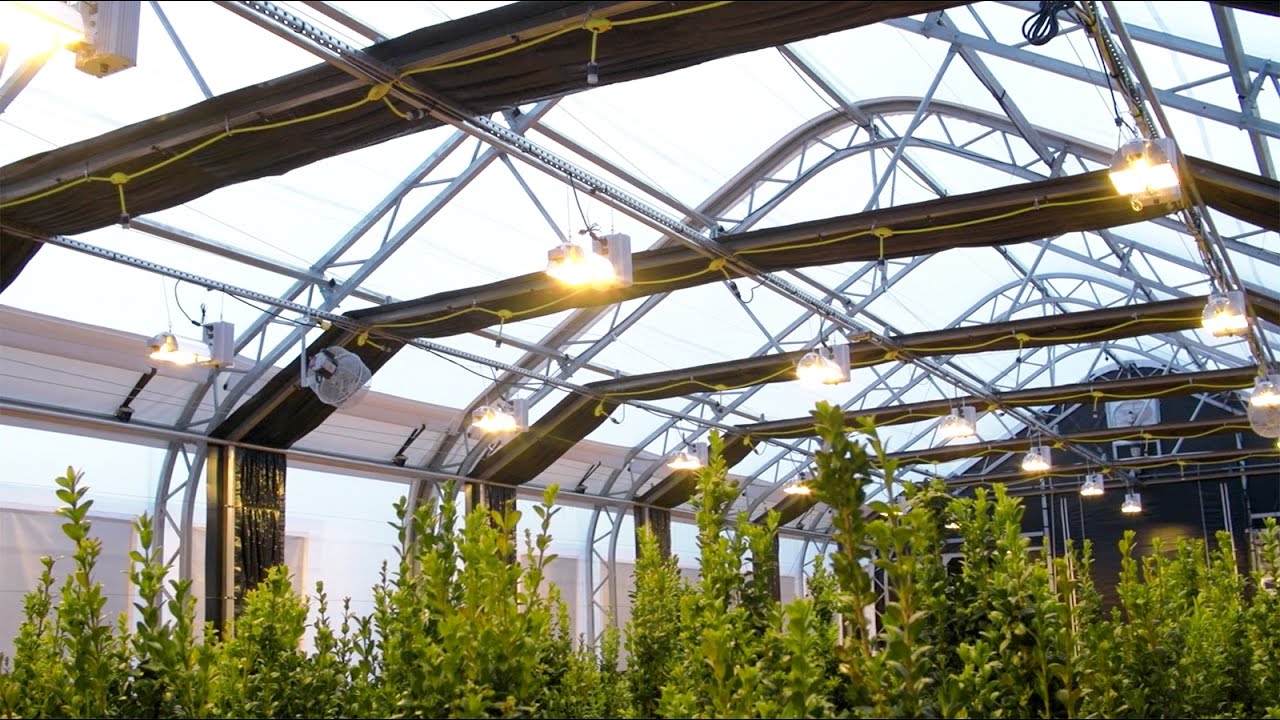
Solar thermal systems are cost effective, in comparison to photovoltaic systems, and are a sustainable form of thermal energy heating. These solar systems collect solar energy through a black painted, copper piping system that is contained within a thermal, glass box structure. Since natural radiation is inconsistent, the grower may also need an alternative heating unit to use intermittently. This is usually a unit burner or an electrical heating pump that is fueled via organic materials or biomass. A study discovered that a solar thermal system can produce up to 40-50% efficiency while the unit burner or electrical pump can compensate for the rest of the 50-60% of energy.
 Site Title