Module eight focuses on the importance of greenhouse irrigation water and the role it plays in produce health. Water plays a major role in photosynthesis and the circle of life since it dissolves nutrients, carries those nutrients throughout the system, maintains cellular health, and maintains ideal temperatures. In order to understand the type of irrigation water that a plant needs, the grower needs to understand the pH balance, or acidity content, and the alkalinity levels within the water.
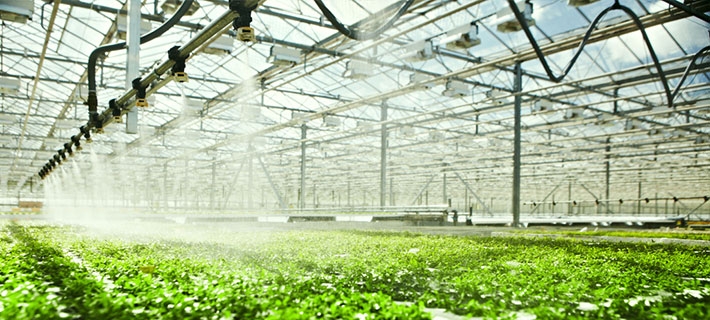
The pH scale is a reading that refers to the measurement of hydrogen within the liquid, which correlates to the range of acidity. The scale is between 0-14, 0 referring to the most acidic and 14 being the most basic. Greenhouse produce thrives in the pH levels 5-6, since they thrive in higher acidic ranges. The alkalinity of a solution refers to the ability to counteract, or negate, acid. This affects the content of acid that is required to change the balance of the pH. Salinity, the total amount of dissolved salts in a solution, is also something to pay attention to when regarding irrigation water. The total dissolved salts, otherwise known as TDS, is a measurement that determines sodium content since sodium is necessary for some crops but not others. A high sodium content, which is absorbed through the root zone and leaves, will result in leaf irritation.
Water testing can be done through a water analysis laboratory to figure out the contents of the water and what is detrimental or not.
Checking water quality regularly is essential so that the grower can know the nutrient content being distributed. Apart from nutrient content, the grower should also pay attention to damaging biological organisms or other elements that need immediate mending. Harmful factors such as iron fixing bacteria, discolor the plants natural pigmentation and cause nutrient deficiencies. To remove the bacteria, once it starts to cause issues with the produce, the greenhouse manager should install an aeration pump. If further steps need to be taken to remove the bacteria, there is also a chlorine injection and filtration agent that can be used as a disinfectant. Water quality is inclusive of micro elements which are primary in plant growth. This includes chemicals such as copper, aluminum, boron, fluoride, manganese, molybdenum, and zinc since they are needed in micro amounts to help optimize plant cultivation. Fluoride, testing at a low pH, can be harmful to the produce so it is important to pay attention.
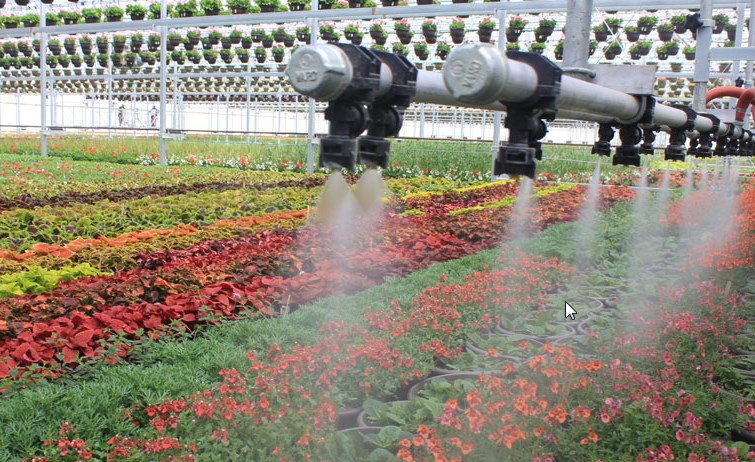
In addition to the quality of irrigation water, the quantity also affects the growth of the greenhouse crops. If a crop is overwatered then it may result in wilting, excessive and unstable growth, softining, and failure to ship efficiently. If a crop is under watered than it may result in wilting, stress, reduced leaf and stem sizes, and hardness. Manual watering is performed by experienced, skilled employees for touch-ups in addition to irrigation systems. Quantity of water changes seasonally as well, for example there is additional water utilized in the evaporative cooling method during the warmer months of the year.
 Site Title