Module three covers both heating systems and steam tables, and their important role in greenhouse development.
A steam table is a display of the relationship between heat quantity, temperature, and pressure. Steam is transferred from a hot water boiler to any location in the greenhouse where plants need to be humidified. The energy required to steam water, known as heat of vaporization, is maintained at a certain temperature to avoid overheating or cooling. The pressure required to create a heat transfer, creates heat in the ventilating pipes.

Photo by Rafael Guajardo
Once all of the latent heat has been emitted, it is important to control condensation. Condensation is an inevitable result of heating systems and should be collected to be reused in the water boiler. If there is a build up of condensation, the high pressure steam projected at increased speeds will cause the condensation to move around and ultimately damage the heating system. Additionally, there are different water hammers which result in excessive condensation content such as “thermal shock”. Thermal shock is when the ratio of condensation to steam is thrown off and causes a shock wave through the heating system causing damage to the materials.
Another factor to look out for when managing heating systems, is outside air or gas being emitted into the steaming system. There is a normal content of non condensable gas in the exchange system, but when too much builds up without being filtered out there is the potential of stopping the steam altogether. There should be traps installed to remove both excessive condensation and unwanted non-condensables.
When designing a heating system, the goal is to increase photosynthesis while decreasing respiration. This should be adequate in increasing profits without additional energy or labor outputs. Factors that should be considered when choosing a heating system are the insulation values, the total surface area of the greenhouse, the outside vs. inside temperature difference, radiation intake, and the infiltration. Energy conservation plays an important role in greenhouse production, a cost-effective and common technique is the instillation of an energy blanket made out of flexible fibers. It is significantly effective in reducing energy consumption.
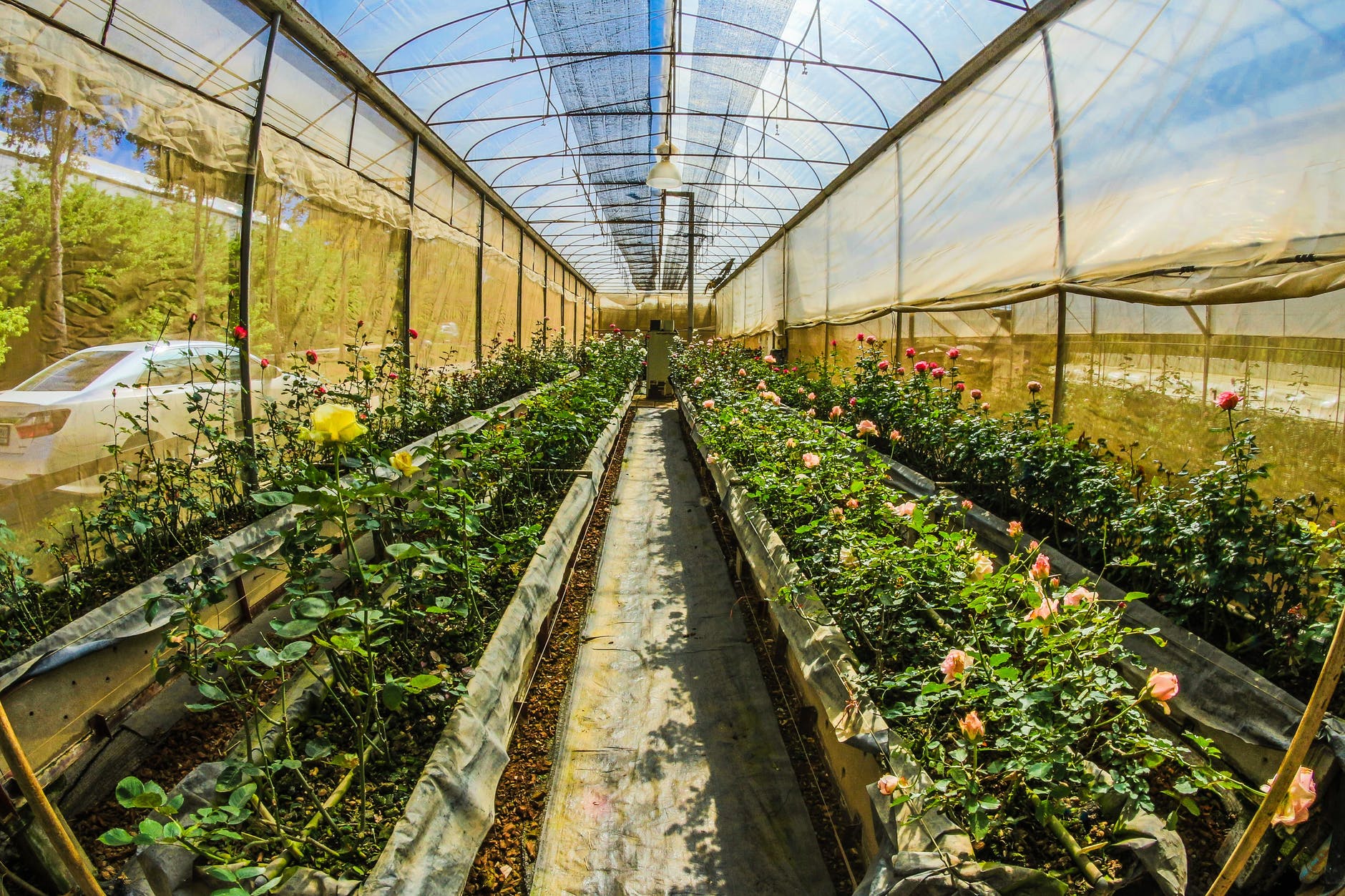
There are a few heating systems mentioned, amongst those are the hot air system, hot water pipe, bottom heating systems, and radiant heating systems. A hot air system is a propane or natural gas fueled unit heater with components of fresh air. Outside air is added for combustion and distribution of heat occurs through forced air being projected via an electrical convection fan. A hot water pipe is an arrangement of pipes carrying warm water and heat energy from a water boiler to different zones of the greenhouse. Bottom heating systems come a few different variations such root zone heating, concrete heating, and top or bottom bench heating. Floor heating allows stored energy to be contained in the floor and can be controlled by using cooling agents and keeping base temperatures so the crops are not heat damaged. Lastly, there is radiant heating which involves combusting natural gas, at high temperatures, through metal tubes that run throughout the greenhouse structure. The metal tube utilizes infrared radiation which allows for heat without warming all of the above air.
 Site Title